Never Fall in Love
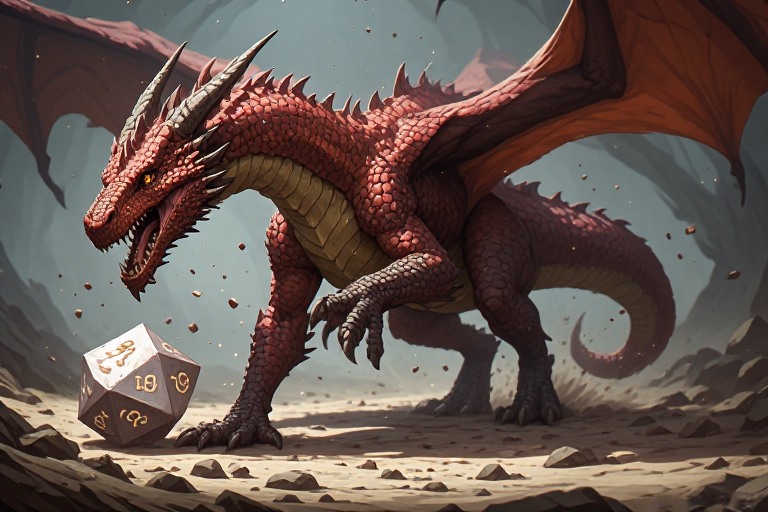
Disclaimer: while D&D and Gary Gygax are all true artifacts from the 20th century, the “idea behind the rules” notion was invented for the sole purpose of making a point. It is not based in any way on actual thoughts anyone in TSR, Inc. may or may not have had.
I’ll try to make it a short one.
When I was young I used to play D&D. It is an acronym for Dungeons and Dragons. A game invented by one Gary Gygax in 1974. It is a role-playing game (the kind where you assume the role of someone fictitious and act out some intriguing fantasy), a bit like what children do in the park, pretending sticks are swords, or adults do in the bedroom, pretending plumbing is sexy.
D&D, however, was developed from a strategic war game into a make-believe game, and included a set of rules and dice. The rules were used to help the players navigate a story managed by the game leader (a.k.a. Dungeon Master == DM / Game Manager == GM) — in a way that made them feel less silly than just a group of people shouting nonsense at each other.
All this prelude (not so short, eh?) is here so I can talk about the rules.
* * *
But in order to talk about rules, I have to make sure you understand the setting:
D&D is set up in a fantasy world that resembles the world Tolkien weaved in Lord of the Rings, and other fantasy authors, like Lewis, Moorcock, and Homer, presented in their work. A world of magic, monsters, and medieval warriors. No technology. No stock exchange. You know, the good old days.
The GM tells a story and the players play characters within it. You play Frodo, and the GM throws Orcs at you. You play Jason, and there’s a nice-looking Hydra for you to chew on. Want to be Arthur Pendragon? The GM will set up a legion of windmills to be defeated. You may think I mixed the stories, but no! This is what D&D is all about. Take all the ingredients of all legends from the last 3000 years, and mix them up into a new adventure. And the rules enable it.
The rules include a list of fantastic races and professions for the players to choose from. And a list of monsters for the GM to pick from. And a set of tables that lists the chance of a character to hit a monster. And to pick a lock. Or disarm a trap. Or swallow a fly. And using these tables, and a set of oddly shaped colorful dice, you can experience hours of dazzling-baffling-frustrating fun you can never get in simpler games, like Scrabble.
So there you go. You have an open-ended game with a LOT of rules, where the primary challenge is… understanding the rules.
And the reason for that is that behind these rules there is a very simple statistical principle.
The thing is that: let’s say you want to quantize real life. Give it an orderly set of rules that covers everything. And dear old Gary thought about it. And the idea he landed on was: “the flip of a coin.”
An average man has a 50/50 chance to hit an average guy. The same man has the same chance doing everything else. Given any other consideration is not taken into account. Using blind luck, you will open any door, climb any rope, jump any gap — fifty percent of the time.
Of course it is not true. But it creates a very neat base for a rule system. You start at 1:2 and adjust it based on characteristics and experience you gain during gameplay.
Some of you more math-savvy practical chums will like this idea. It is simple, useful, and almost… beautiful. But like any other theoretical idea, when you come to implement it, it becomes complicated.
Gary created three versions of the game.
In the first (Basic D&D) there was a box set, with a few flimsy manuals, and about twenty tables. In the second (Advanced D&D) there were five-plus hardcover volumes, with more than fifty tables. In the third (Advanced D&D 2nd edition) there were twenty books with hundreds of tables and THAC0! And this choice of food was his downfall.
* * *
“To Hit Armor Class Zero” is a magic number you can use to decide how high you should roll in order to hit your opponent. It eliminated the need to use a hit-table in battle scenarios. All you had to do is subtract A (AC) from B (THAC0), and get the number you need to roll. Simpler! Faster! Cheaper! Much more room left in the rulebook for colorful drawings of young maidens in very impractical armor, luring teenagers to buy the book and forfeit the need for Playboy magazine.
But Gary forgot one simple real-life fact. People HATE subtraction! Most of them have a hard time adding things up. And this new rule pushed a lot of potential nerds out of the customer circle.
And why did Gary Gygax forget this fact? Because Gary was in love.
Gary Gygax fell in love with his own idea that sat at the heart of the entire rule system. The 50/50 chance idea. And THAC0 was his way to share this love with his followers (a.k.a. paying customers).
Why this magic number was the embodiment of this idea… is not important*. But it was. And there it stayed. And the company went bankrupt, or got bought, or whatever. And Gary had to start over with another failed role-playing game. And died rich and happy in a sanitarium…
* * *
Years later another company bought the rights to the D&D game, and turned it into a new rising success.
Other than making the books more attractive to young and old by providing vivid, high-quality drawings depicting edgy fantasy rather than light porn, they simplified the rules considerably. And the first thing to go was THAC0.
You see? The new game designers were not in love with the original quirky rule-system idea. They said: here’s a number (AC) — if your die roll is higher, you hit. Happy Hanukkah!
* * *
And there is a very old lesson here:
Never fall in love with an idea!
You may think your idea is beautiful. You may be sure it is so simple and robust that it must be better than any other. And hold on to it like a leech to thrombosis.
But if you find yourself in that place, you must stop and rethink. Because it is very likely that you are missing something. Redesign, or look around for something better. Something more practical that other people may be able to share. Because no one wants to think just for himself. Especially if you want to make money.
Bill Gates was so sure a smartphone operating system must be Microsoft proprietary that he forgot his first operating system was something he bought off an eccentric engineer. And made Microsoft lose one of the largest markets on earth.
Tesla was so sure that he knew electricity better than anyone else (which he probably did) — that he lost the domestic-electricity market to a shrewd businessman.
And me… I was so in love with a product concept — that I ended up with something I could not explain to myself. Lucky for me, it was closed minutes before it went out to production, and turned into a business disaster.
So that is all.
Remember: Don’t fear the reaper. If your idea fails to live in the real world — kill it!
* For those of you that have no life and still want to know why THAC0 is the embodiment of the 50/50-chance idea, here is the explanation:
Any unprofessional character in D&D starts with AC 10. This is anyone that is not a battle-ready individual. Let’s say: a farmer. It means that he is 50% likely to get hit if someone attacks him.
The same farmer has a 50% chance to hit another farmer. Because he has a natural THAC0 of 21.
And this is how it works:
We subtract the victim’s AC from the offender’s THAC0, and in this case get 11. It means that when the same farmer wants to hit another farmer, he rolls a 20-sided die (yes, D&D has a die with 20 sides! I said it was a fun game), and has to get 11 or higher to hit Mr. Another. The numbers between 11 and 20 are exactly half of the available numbers on a D20 (the D&D name for a 20-sided die), which means exactly 50% to succeed.
If the farmer picks a career change, and decides to become a warrior, he would probably put on leather armor (not the feminine type, that covers only the gender-specific parts, but a real one) — and will have AC 7 (the rules say).
And then Mr. Same will have only 30% chance to hit him: 100% − (21 − 7) × 5% = 30%.
Yeh.
Math.
It’s f**king awesome!